Is it a relief to get a diagnosis?Jun 28, 2022So I noticed, now that I'm dictating my entries, they seem much longer. I would appreciate some feedback from my fuel oil readers as to whether or not these entries are too long. If they are, I can break them into pieces or make an effort to be more concise. I will say, generally their topics that I feel need a little time and energy. But I want to make sure that I'm satisfying the needs of those who actually read. So let me know if you feel like it, what your jam is. I tend to try to balance some short and some long. And I'm also going to try to get a video blog / YouTube channel off the ground this summer as I finally finished the redesign and relocation of my website. Anyway, now that I've made this a gigantic paragraph longer than it needs to be, here we go. I honestly can't remember if I've written about this yet. I know I say that a lot. But I've been writing this blog for about 8 years maybe 10. Almost every week. Sometimes it's hard to keep track of what I've said here and what I've just been telling clients and friends. But this is come up recently, as a friend of mine has had her oldest diagnosed with a slew of conditions that are quite reminiscent of the package of situations that my youngest deals with. I was texting with her the other day, as we haven't had a chance to really connect in person yet, about how she felt finally getting these diagnosis. I won't share her thoughts. Those are hers. But it reminded me very much of when my youngest was diagnosed with pediatric bipolar the age of four. My dad's not a guy who swears a lot. But when I told him, I'm pretty sure he said, "oh s***!" My mom was similarly distressed, feels slightly classier. That's a joke, in terms of my dad being less classy. It's mostly about the potty mouth that I acquired well working as a professional chef. I can't remember exactly my wife's reaction. It wasn't quite so dramatic. My wife tends to respond with sadness, not anger. So I think there was a certain amount of mourning. I was borderline elated. I was so desperate to have an answer that I was psyched. If you don't have an answer how can you deal with it. I've also run into this with a lot of adult clients lately. These are people who are bright reasonably competent humans who get diagnosed in adulthood and look back and say oh my God. This explains so much. So, my takeaway is that I'd always rather know what it is. Y'all know me. I'm an action-oriented dude. I put stuff on my to-do list. And I make it happen. You tell me what we're dealing with, I'll research it. All partner with the doctor. I'll learn as much as I can. I'll take parenting classes. But if I don't know what it is, it feels like a shot in the dark. So my suggestion, is to get yourself or your kids a legitimate diagnosis for whatever you think is going on whether it's a mood disorder, dyslexia, ADHD, whatever else. Then get yourself hooked up with a quality clinician and put together a plan. Of course, over time that plan will need to be adjusted maybe the diagnosis will change over time. Maybe it'll still suck. But probably less. And you'll probably feel like you have a little more control. I wish you all the best of luck. I'm still fighting the good fight on my journey.
|
Do we really need more hours in the day?Jun 21, 2022So, dictating these entries into my phone seems to be going well. And it's definitely faster than typing. I don't know why the voice recognition works better on my phone than it does in Google docs. I have an android. You would think it's the same stuff running behind the scenes. Anyway, it appears that my typo rate is about the same so I'm going to stop apologizing for any potential voice recognition snafus. And I will just get on with it. I think I have not met an ADHDer who didn't want more hours in the day. But I think it's really important to recognize that time is not the only resource that we lack. In fact, we often mistake our lack of focus, bandwidth, emotional energy, or whatever you want to call it for a lack of time. Yes, it would be helpful to have an extra hour in the day. But, would that actually lead to more productivity? If you spent that hour screwing around on Instagram or wasting time hyper focus on something else unimportant, what would that extra hour do for you? I think it's important to realize that we do have a limitation in terms of how many hours there are in the day. However, I find as a person with ADHD, that the more important limiting factor is my number of attention hours in the day. I kind of think of myself, or my brain at least, as a analog to a cell phone battery. It doesn't drain at a constant rate. It depends on what you're doing. If you're streaming Netflix or gaming it's going to burn faster than if you're just talking or texting or the phone is mostly on standby. I think our brains are much the same way. The one key difference is that once our attention battery is depleted, we can't plug back in and get ourselves up to 25% and go back at it. Usually, if we burn our battery out, it's out for a while. So that extra hour in the day, if we are not in a place to have the bandwidth to utilize it, it really doesn't do us much good. The point being that we have to manage the content of the hours in our day and how they affect / drain our battery to maximize those hours. Of course, to a certain extent, this means different things to different people. But, to me it means taking breaks, being intentional about my tasks, practicing really good self-care including exercise, mindfulness, and sleep. I also emphasize to my clients how important it is to recognize when you hit the point of diminishing returns. This comes up a lot with my student clients. There is a point at which continuing to do homework is actually a waste of your time. You are better off going to sleep, getting a good night's sleep, and waking up well rested to finish whatever work you have. Unless you're running on adrenaline, which is an entirely different problem and a different blog entry, what you get done between 2:00 a.m. and 3:00 a.m. will never be enough to justify being up for that hour. That is especially true if it perpetuates a cycle of sleep deprivation, which continues to deteriorate your overall attention and bandwidth. And, of course, addressing the underlying attentional issues pharmacologically and behaviorally is foundational to all of this. That will increase your bandwidth and might as well give you more hours in the day. See standard disclaimer in other blog posts.
|
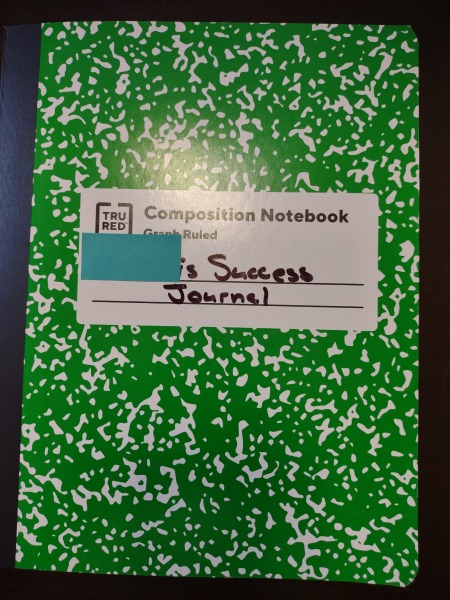
Success Journal: Consolidating successes & building real confidenceJun 13, 2022I’m pretty sure this is a human thing. But it is also a decidedly ADHD thing. The thing being, not being so good at remembering when we did well, overcame obstacles, tackled our anxiety, and generally succeded in an unexpected (to ourselves) way. Again, having only been an ADHD person and having mostly coached and studied ADHD people for the last decade plus, I come from the ADHD perspective. If my thoughts are more broadly applicable, great. Over the years I’ve done a lot of thinking about why ADHDers are not so good at consolidating positive experiences and using them as templates for future challenges. I have some thoughts on that. I’m not sure that the post mortem on the “why” is the most important part of this. So, if you aren’t interested in the “inside baseball” analysis of this, feel free to skip ahead to possible strategies while I nerd out on the causes. There are well known studies that show ADHD kids get something like 20:1 negative:positive feedback. Yet we are often pretty darn smart. My client base certainly is. But we tend to learn at an early age that what we are bad at is valued by society AND generally considered easy by our neurotypical peers. All that EF stuff like planning, being on time, handing things in, paperwork, showing our work, etc. Simultaneously, the things that we are good at tend to come so easily that we almost take them for granted. And, sometimes they aren’t things that are valued, at least tangibly, by our society. For example, people skills are something that can be a great predictor of success in many career paths. But they are a thing that is almost never emphasized or rewarded at any level of schooling. So, what often happens is that people who are largely successful have a distorted self image. They see themselves as average or below average at what they do. They often experience imposter syndrome. And their overall self worth is affected dramatically. All this because they spend so much time focusing on their comparative weaknesses and not on their strengths. Sure, we need to work on our weaknesses. That’s why I have a thriving coaching practice. But, I also do a lot of cheerleading for talented clients who don’t give themselves nearly enough credit for how talented and competent they really are. These folks really deserve to work on the tough stuff but in the context of realizing that it is largely fine tuning, and that they are really pretty exceptional in the grand scheme. It’s not arrogant to know what you are really good at and be confident in it. In fact, I think it is key to balancing out our feelings of shame for the things we are weaker at. Hopefully, eventually, we can move past shame and just understand our limitations and love ourselves a whole. A flawed, but overall awesome whole. I figure everyone is flawed. Not everyone is awesome. Enjoy it. As for how to get there. I’ll offer one simple solution today. Start keeping a success journal. Write down a quick entry about something that you were anxious about or something that you worked hard to get good at. Not the feelings you had, before, during, and after. Also give a little context. Don’t write a novel, or you’ll never make more than one entry. Do it for victories large and small. Then, when you feel overwhelmed by something, whether it’s a task, an interaction, a situation, or whatever, consult the journal. Use your past successes as templates to move yourself through the present situation. It’s a way of reinforcing the power of experiential learning… which is really powerful… when we don’t ignore it. Try it. See how it goes. I just started a journal for my 13 year old. He’s had lots of recent success. I want him to use them to keep the ball rolling. Good luck! Standard Disclaimer: In an effort to foil my own perfectionist tendencies, I do not edit my posts much… if at all. Please excuse and typ0s, Miss Steaks, grammatical errors, awkward phrasing. I focus on getting my content out. In my humble opinion, an imperfect post posted is infinitely better than a perfect post conceptualized but unfinished.
|
Slowing down in the momentJun 9, 2022This is my second attempt to post a blog entry only using voice recognition on my phone. Hopefully it will also be successful. Last time seemed to go well. I will ask you to bear with me if there are any weird typos related to autofill. There are so many moments in our day when something small and useful, perhaps even vital, definitely efficient, seems like a big deal. Ultimately, we don't have an accurate understanding of what attention is. The ability to do the unpreferred thing that feels tedious boring or overwhelming. That is attention. Just as much as sitting down and paying attention to a lecture in college is attention. But those little things happen all day everyday. When you get change at the convenience store do you take time to put it in your wallet or just jam it into your purse for the pocket of whatever jacket you're wearing? When you bring the mail in, do weed out the junk mail and put it right in the recycling? Do you have a convenient place near the door to put the mail? Or do you just throw it on the dining room table with all the other mail until it becomes a pile that's so overwhelming you don't want to deal with it? After you make dinner, if you don't feel like doing the dishes, do you leave the leftovers so that they're gross and unusable the next morning when you get around to the dishes? Or do you take 2 minutes to put them in a tupperware so you can have them for lunch the next day? I'm not looking to shame anyone here if you're doing the non-optimal behavior. And you'll note that I'm not even framing it as a choice. We have years of track record telling us that slowing down is hard and doing tedious boring things is bordering on painful. But, there's also a lot of stuff that isn't as bad as we think. These are three random examples that I pulled out of my ear as I sit here banging out this post. But think about it. Putting your bills and change away in a reasonable way, packing up your leftovers for lunch tomorrow, taking the time to do a pre-organization of your mail, how long do all three of those things take if you put them together? 30 seconds Plus a minute Plus 3 minutes. We're looking at a total of less than 5 minutes to have your money more organized, your mail more organized, and lunch made for tomorrow. Think about how much time that saves you in the long run. And not just time, think about how much bandwidth that saves you with those projects not being big projects. Now, I know it's not easy. It's a major paradigm shift. And it requires us to do the uncomfortable thing, the boring thing, the tedious thing multiple times a day. But if we set up systems to make those things as easy as possible and we're diligent about repeating those actions, overall our life gets way easier pretty fast. So think about it. Think about what you can address in the moment and not kicked down the road.
|
Why I don't believe in procrastinationMay 26, 2022First of all, I'm using voice recognition on my phone to write this sitting in a parking lot while my youngest is in OT. I hope it works. And I hope it comes out legible and linear. Hooray technology! Hooray multitasking! So I don't believe in procrastination. I believe it is a label we put on a behavior that we don't understand. Nobody gets up in the morning and says to themselves, I've got something really important to do and it's going to negatively affect me if I don't do it but, damn it, I'm just not going to do it anyway. It might look like that from the outside. But nobody makes that conscious choice to fail. Many wise people have said to me, people succeed when they can. I've been talking about this not believing in procrastination with my clients for years. I do that because almost everyone I work with lists procrastination is one of the top three things they want to fix in coaching. But that's like saying I want to fix my grades. Are you going to break into this school computer and fix your grades? Because grades are not a thing that exists in and of themselves in a vacuum. They're the result of weeks and months worth of accumulated behaviors. Coaching, at its core, is behavioral intervention. So it's my job to figure out what's the underlying situation when a client tells me they have a problem with procrastination. The reason I am writing this particular entry now after talking about procrastination for so many years with so many clients is that I think I finally have a good way to articulate what's going on underneath the surface. Imagine an old school balance scale like the one that the statue of Justice holds. Every potential behavior gets weighed out on our scale before we even do it... Or don't do it. There are behavior motivators and there are behavior demotivators. You have to dig a Little deeper than just writing something off as procrastination to find out what they, are how many there are, and how powerful they are. But that's the Crux of changing your outcomes. It's changing your behaviors. Or at the very least starting by understanding them. So if you're a person who puts yourself in the procrastinator category, I suggest you ask yourself this when you feel like you're putting something off: what are the forces pushing me to do the thing and what are the forces that are keeping me from doing the thing? No I'm not saying this is the easiest thing to do, especially on your own. That's one reason I have a thriving coaching practice. But if you look at our concept of procrastination through the lens of ADHD, what you'll see is that there are hidden and very powerful demotivators. For example, it may be excruciatingly difficult for us to sit still and produce some expected piece of work because of attention, boredom, or executive function weakness. All that may add up to a pretty overwhelmingly powerful reason to not engage in working on said piece of work. Why we need to do the work and hand it in is pretty obvious. But if we don't really understand our ADHD and how it shapes our daily life and our ability to execute tasks of all kinds, how can we really understand what's on the other side of that scale, pushing so hard against our productivity. And that's just the adhd. For the many of us who deal with depression and anxiety as well, then it gets even more complicated. Because once we start not doing the thing, our anxiety increases. And that anxiety isn't necessarily specific to doing the thing. It may be all encompassing about the thing. So now in order to engage on this piece of work we have to fight our attention and our anxiety. So what happens then? Generally over time the need to hand the thing in whether it's for school, work, life becomes so urgent with such high potential consequences that the motivating force to get it done exceeds the demotivating forces of how much it's going to suck to do it. Of course this means we need to really understand ourselves, our adhd, our comorbidities, and be interested enough, and brave enough to dive into what these demotivators are. But once we do that and figure out what they are. That gives us a pretty good path to what the next steps are to success. Is it about managing your add better? Is it about managing your anxiety better? Is it about behavioral intervention? Is there other stuff going on? Or is it a little bit of everything? I suggest you start asking yourself these questions and see where it takes you. I wish you all the best on your journeys of introspection I hope it leads you to a place of clarity and eventually productivity.
|
Don’t Reinvent the Wheel Systematize And Things Won’t Fall Through The CracksMay 17, 2022One of the biggest problems that my clients and ADHDers in general have is that when they run into a problem, they are so stressed, overwhelmed, pressed for time, or perceive themselves to be rushed that they slap a proverbial band-aid on the problem but don’t take the time to really fix the underlying problem. (Side note: did I just start a post with a three line long sentence? FYI: I’m not fixing it!) Suggestion: Take a deep breath. Realize that you have a moment to at least capture said problem and potential solution on something like a To Do List. Then it won’t leave your mind for good and you have some hope of coming back to it later and really fixing the underlying problem. ‘Cause when we aren’t in the heat of the moment, we’re actually pretty good at fixing stuff… most of the time, if we’re not super anxious. Real answer: systematize the s*** out of everything. Don’t go reinventing the wheel. We’ve got lots of wheels. Wheels are cool. No doubt. Invent something different. Example: When I book a new client I do five’ish things RELIGIOUSLY:
EVERY TIME. EVERY TIME. EVERY TIME. I don’t have to even think. Not thinking rules. It requires very little attention. Multiply this by every aspect of your life… Thik how much time and energy you’ll save. Standard Disclaimer: In an effort to foil my own perfectionist tendencies, I do not edit my posts much… if at all. Please excuse and typ0s, Miss Steaks, grammatical errors, awkward phrasing. I focus on getting my content out. In my humble opinion, an imperfect post posted is infinitely better than a perfect post conceptualized but unfinished.
|
| page | 1 | 2 | next |